Body Glide vs Squirrel's Nut Butter: which actually works for ultra runners
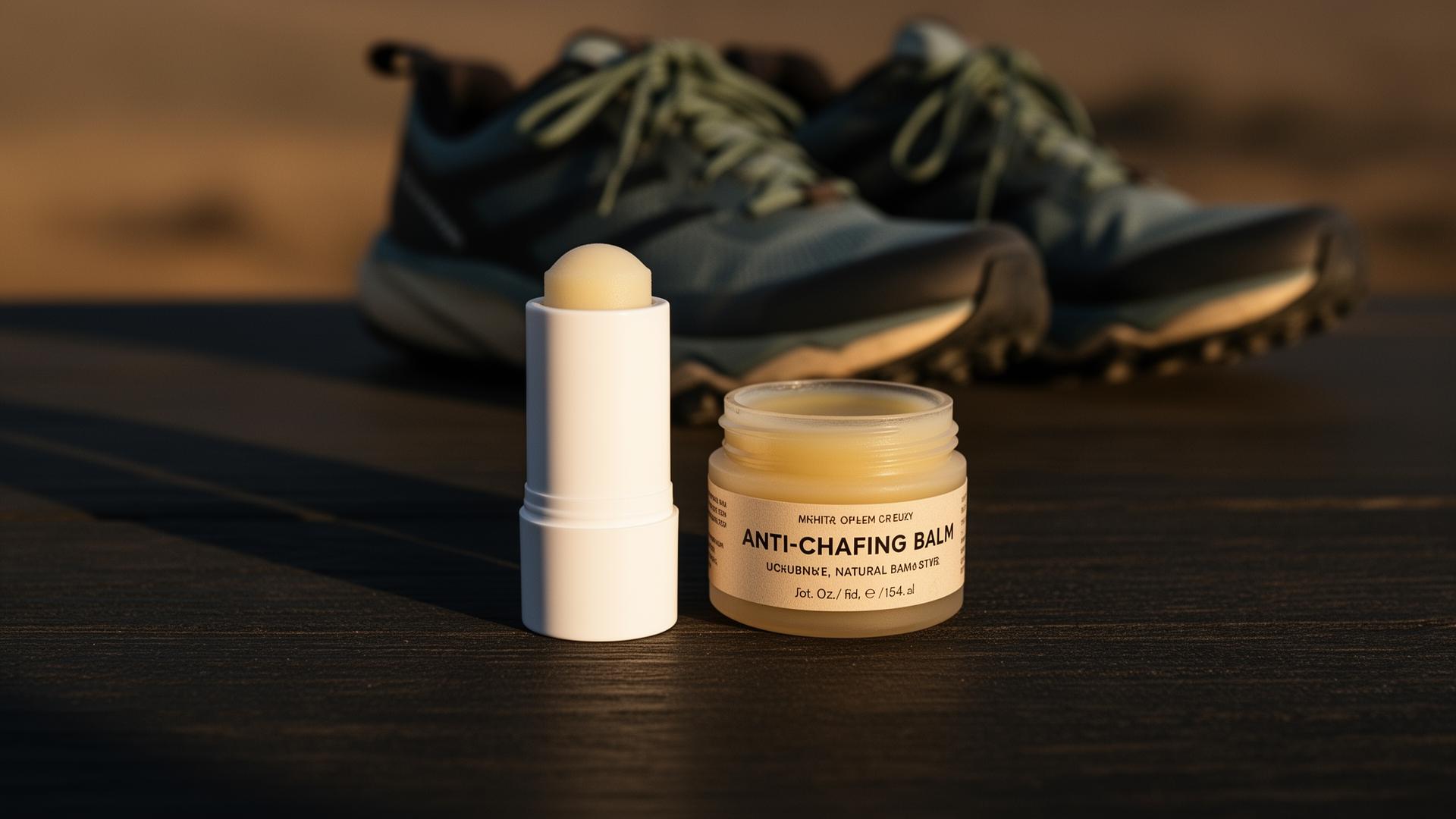
Somewhere past hour three, the product you trusted stops working.
It doesn't matter which one you chose at the start line. Body Glide or Squirrel's Nut Butter -- the two names that dominate every ultrarunning forum, every pre-race checklist, every drop bag packing list. Both work. Both have loyal followings built over years of trail miles and bloody nipples and raw inner thighs. But both share a limitation their marketing departments don't mention: neither was formulated for the distances where protection matters most.
For high-mileage athletes covering 50 miles, 100K, or beyond, the question isn't which product is better. It's understanding why each one fails and when.
The science: two different approaches to friction
Body Glide and Squirrel's Nut Butter represent fundamentally different philosophies of skin protection. Understanding the chemistry explains why each performs differently in the field.
Body Glide uses an anhydrous wax-based system built around caprylic/capric triglyceride, cetearyl alcohol, ozokerite wax, glyceryl behenate, stearyl alcohol, allantoin, and vitamin E.[1] It's a dry-touch stick. Plant-derived, no petroleum, no mineral oil, no lanolin. The ozokerite wax provides structure with a melting point between 58-100°C, while the fatty alcohols (cetearyl and stearyl) create a lubricating film that reduces surface friction on contact. Allantoin, an FDA-approved skin protectant, adds a healing dimension and enables OTC drug classification.[2]
The mechanism is primarily film-forming with lubrication. Body Glide deposits a thin barrier layer that sits on the skin surface, reducing the coefficient of friction between skin-to-skin or skin-to-fabric contact points. Application is clean. There's no greasy residue. For runs under three hours in moderate conditions, it performs reliably.
Squirrel's Nut Butter takes the opposite approach: four ingredients, no compromise. Coconut oil (lubrication, antimicrobial properties), cocoa butter (occlusion, moisturization), beeswax (film-forming, water resistance), and vitamin E (preservation, healing).[3] That's it. The formula relies on what cosmetic chemists call a dual-action system: occlusive barrier plus lubrication, where the beeswax and cocoa butter create a physical shield while coconut oil delivers immediate slip.
The simplicity is the strength. Endorsed by athletes like Courtney Dauwalter and Jim Walmsley, Squirrel's Nut Butter built its reputation through the ultra community word-of-mouth rather than retail distribution.[4] It works because the natural oils and butters integrate with the skin's own lipid layer rather than sitting on top of it.
Where each product wins and where it breaks down
Performance diverges based on three conditions: heat, moisture, and duration.
In heat (above 85°F): Body Glide holds its solid form better. The ozokerite wax system maintains structure up to roughly 100°C, which means it won't melt in your drop bag or turn liquid on your skin. Squirrel's Nut Butter, however, becomes noticeably soft above 90°F and functionally liquid in high heat.[5] If you're racing in Arizona or running through a summer afternoon, Body Glide is the more stable choice.
In cold (below 50°F): The inverse. Body Glide applies easily across temperature ranges, while Squirrel's Nut Butter hardens and becomes difficult to spread.[5] Winter ultras or high-altitude mountain races favor Body Glide's consistent application.
In heavy moisture and humidity: This is where both products struggle but for different reasons. Body Glide's film-forming layer can begin to break down as sweat accumulates underneath it, particularly in skin folds and high-friction zones where moisture has nowhere to evaporate. Research shows that moisture significantly increases skin friction coefficient, creating a paradox for any surface-level barrier.[6] Squirrel's Nut Butter resists sweat washoff somewhat better due to the beeswax content and the way its oils absorb into the skin. But neither truly solves the humidity problem.
Beyond hour three: Both products reach their practical ceiling. Body Glide's thin film wears through with repeated movement. Squirrel's Nut Butter's oils absorb fully into the skin, leaving diminished surface protection. This is the duration gap that most anti-chafing products share. They were designed, tested, and marketed for efforts of one to three hours.[7] Ultra distance demands something engineered for longer.
| Body Glide | Squirrel's Nut Butter | |
|---|---|---|
| Active approach | Film-forming + lubrication | Occlusive + lubrication |
| Key ingredients | Ozokerite wax, fatty alcohols, allantoin | Coconut oil, cocoa butter, beeswax |
| Application feel | Dry-touch, clean | Rich, slightly oily |
| Heat stability | Strong (wax system to ~100°C) | Poor (softens above 90°F) |
| Cold performance | Consistent | Hardens, hard to spread |
| Sweat resistance | Moderate | Moderate-good |
| Realistic duration | 2-3 hours | 2-4 hours |
| Format | Stick | Tub / squeeze tube |
| Price (approx.) | $10-13 | $10-16 |
| Best for | Road marathons, moderate conditions | Trail ultras, cooler conditions |
Application: making either product work for ultra distance
Neither product was built for 100-mile races. But with protocol adjustments, both can serve as part of a layered protection strategy.
Pre-race application: Apply generously to all high-friction zones 15-20 minutes before the start. For Body Glide, use multiple passes to build film thickness. For Squirrel's Nut Butter, allow time for initial absorption before adding a second coat. Focus on inner thigh contact points, nipples, underarms, and any area where pack straps create friction.
Reapplication schedule: Plan to reapply every 2-3 hours. Pack single-use portions in drop bags at crew-accessible aid stations. Squirrel's Nut Butter offers single-use squeeze packets designed for this purpose. Body Glide's stick format makes it easy to carry but harder to apply to your own back or shoulders mid-race.
The layering question: Some experienced ultra runners combine products. A base layer of Squirrel's Nut Butter for skin integration, topped with Body Glide for surface-level friction reduction. There's no clinical research validating this approach, but the chemistry is complementary: occlusive base plus film-forming top coat addresses both mechanisms of friction reduction simultaneously.
For athletes looking beyond the three-hour protection window, the science of anti-chafing ingredients points toward formulations specifically engineered for endurance duration. Products that combine multiple barrier mechanisms with ingredients designed to resist sweat degradation over six or more hours.
Key takeaways
Both Body Glide and Squirrel's Nut Butter earned their reputations. They work for the distances and conditions most runners encounter. The choice between them comes down to three factors: your climate, your distance, and your skin's response to each formulation.
For road marathons and moderate conditions, Body Glide's clean application and heat stability make it the practical choice. For trail ultras in cooler weather where you prefer a richer, more skin-integrated barrier, Squirrel's Nut Butter delivers. For anything beyond 50K, plan to reapply either product multiple times and consider whether a purpose-built endurance formula might be the better investment for your skin.
The real question isn't Body Glide or Squirrel's Nut Butter. It's whether either product was designed for the distances you're actually running.
Elite ultrarunners treat body care as systematically as fueling. For efforts extending beyond three hours, Aura's anti-chafe formula was engineered specifically for endurance duration, combining occlusive, lubricating, and film-forming mechanisms in a single application designed for 6+ hours of protection. Explore Aura Anti-Chafe
Frequently asked questions
Is Body Glide or Squirrel's Nut Butter better for ultra running?
Neither was formulated for ultra distances. Body Glide lasts 2-3 hours; Squirrel's Nut Butter lasts 2-4 hours. Both require reapplication during events over 50K. Body Glide performs better in heat, while Squirrel's Nut Butter integrates with the skin's lipid layer for slightly longer protection in moderate conditions.
Can I use Body Glide and Squirrel's Nut Butter together?
Some experienced ultra runners layer both: Squirrel's Nut Butter as a base for skin integration, topped with Body Glide for surface-level friction reduction. There's no clinical research validating this approach, but the chemistry is complementary: occlusive base plus film-forming top coat.
How often should I reapply anti-chafing products during an ultra?
Every 2-3 hours for both products. Pack single-use portions in drop bags at crew-accessible aid stations. Squirrel's Nut Butter offers single-use squeeze packets. Body Glide's stick format is easier to carry but harder to apply to your own back or shoulders mid-race.
Does Body Glide melt in heat?
No. Body Glide's ozokerite wax system maintains structure up to roughly 100°C. It won't melt in your drop bag or turn liquid on your skin. Squirrel's Nut Butter, however, becomes noticeably soft above 90°F and functionally liquid in high heat.
What is the best anti-chafe product for 100-mile races?
For 100-mile races, neither Body Glide nor Squirrel's Nut Butter provides sufficient single-application coverage. Purpose-built endurance formulations combining occlusive, lubricating, and film-forming mechanisms in a single application designed for 6+ hours of protection are a better investment for race day.
Cited works
- Body Glide. "Body Glide Original Anti-Chafe Balm Ingredients." bodyglide.com. Accessed March 2026.
- U.S. Food and Drug Administration. "Skin Protectant Drug Products for Over-the-Counter Human Use." FDA Monograph. fda.gov.
- Squirrel's Nut Butter. "All Natural Anti-Chafe Salve Ingredients." squirrelsnutbutter.com. Accessed March 2026.
- Dauwalter, Courtney. Referenced product endorsement. squirrelsnutbutter.com/pages/ambassadors. Accessed March 2026.
- Consumer product reviews and field reports. reddit.com/r/ultrarunning. Multiple threads, 2023-2026.
- Derler, S. and Gerhardt, L.C. "Tribology of Skin: Review and Analysis of Experimental Results for the Friction Coefficient of Human Skin." Tribology Letters, 2012. pubmed.ncbi.nlm.nih.gov.
- Knapik, J.J. et al. "Friction Blisters: Pathophysiology, Prevention and Treatment." Sports Medicine, 1995. pubmed.ncbi.nlm.nih.gov.