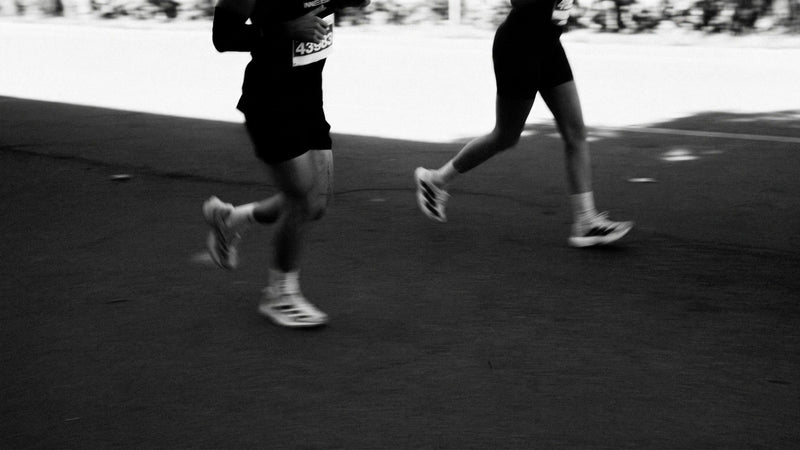
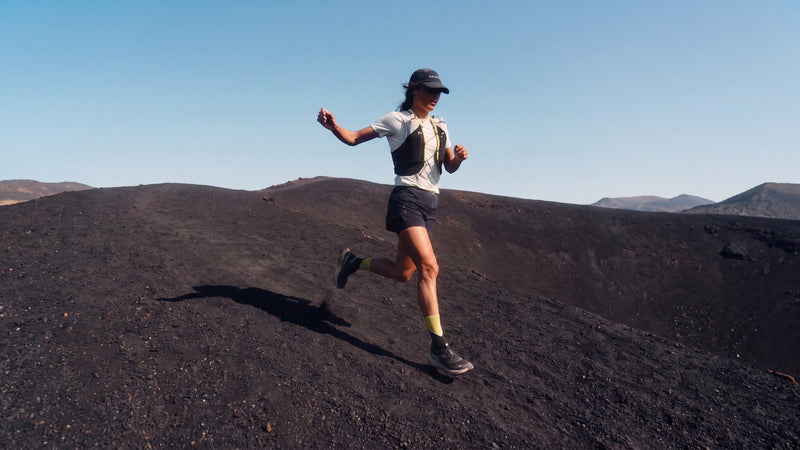
Research published in the Journal of the American Podiatric Medical Association tracked 50 ultramarathon runners across a 219-kilometre multistage race and found that 76% developed blisters by day four.[1] Sixty-five percent of those blisters formed on the toes.[1] In a separate study of 161-kilometre ultramarathons, blisters were cited alongside nausea and muscle pain as the top performance-limiting issues among finishers.[8] The numbers tell one story. The aid station floors at mile 60 tell another.
The frustrating part: most blister prevention advice is written for marathoners running three to five hours on pavement. Our marathon foot protection guide covers that shorter distance well, but for 100-mile runners covering technical terrain for 20 to 30 hours through temperature swings, creek crossings, and multiple sock changes, that advice falls short. The biomechanics are different. The time scales are different. The failure modes are different.
This guide covers what actually works for the specific demands of 100-mile racing, from the science of why blisters form during ultra-distance efforts to the pre-race, mid-race, and crew protocols that keep feet functional across the full distance.
Blisters Are Not Caused by Rubbing
The single most important thing to understand about blisters is that the traditional explanation is wrong. Blisters are not caused by friction rubbing against the surface of your skin. They are caused by shear deformation beneath it.
A 2024 paper in the Journal of Athletic Training described the mechanism clearly[2]: as the bones of your foot move back and forth during each stride, high friction between your skin surface and your sock keeps the outer layers stationary. The tissue between the bone and the skin surface stretches and distorts. When this shear cycle repeats enough times, the stratum spinosum, a layer deep in the epidermis, tears.[3] Plasma-like fluid fills the gap. That is a blister.
This distinction matters because it changes how you think about prevention. Abrasions happen when something rubs across the skin surface. Blisters happen when internal tissue layers shear apart from repetitive bone movement underneath stationary skin.[2] The implication: simply reducing surface friction is not enough. You need strategies that address shear, moisture, bone movement, and repetition, the four elements that combine to produce blister-causing deformation.[2][3]
Three of those four elements get dramatically worse over the course of a 100-miler. Moisture accumulates. Repetition compounds. Foot swelling changes how bones move inside shoes. This is why ultrarunners who never blister at marathon distance find their feet destroyed at mile 70.
Moisture Is the Multiplier
Research on skin friction consistently shows that moist skin has a significantly higher coefficient of friction than either dry or very wet skin.[3][4] The relationship is not linear. There is a critical zone where moderate dampness, the exact condition inside a running shoe after several hours, creates peak friction. This is the environment where shear forces are highest and blister formation accelerates.
A study published in Skin Research and Technology confirmed that hydration of the stratum corneum directly impacts the coefficient of friction at the skin surface.[4] Wet conditions from sweat, creek crossings, or rain push the foot into that high-friction zone and hold it there. Naylor's foundational 1955 research demonstrated that friction was lower when skin was either completely dry or thoroughly wet, and highest when moist[5], a finding that has been replicated consistently across seven decades of subsequent research.[3][4]
For 100-mile runners, this creates a compounding problem. Early miles produce sweat that saturates socks and insoles. Anti-chafe products applied at the start begin breaking down. By hour six to eight, feet are sitting in a warm, damp environment with rising friction and accumulating shear cycles. Every hour after that pushes closer to the mechanical fatigue threshold where the epidermis tears.[2][3]
Stream crossings and rain compound the issue. When feet go from damp to soaked and back to damp repeatedly, the skin softens and becomes more susceptible to mechanical damage. This maceration, the softening and breakdown of skin from prolonged moisture exposure, is why wet-condition 100-milers like Hardrock and Western States produce some of the worst foot casualties in the sport.[9]
"A hot spot treated at mile 40 is a three-minute stop. The blister it becomes at mile 60, if ignored, is a 15-minute stop and potentially a changed gait."
Pre-Race Preparation Starts Weeks Out, Not the Night Before
The runners who cross 100-mile finish lines with functional feet almost always share one trait: they treated foot care as a training discipline, not an afterthought.
Four to six weeks before the race, begin testing every element of your foot care system during long training runs. This means the exact socks you will race in, the exact shoes at the exact lacing tension, and the exact anti-chafe products applied in the exact way. Do not introduce anything new on race day. The Berghaus Dragon's Back Race medical report noted that 38% of competitors required blister treatment[11], and a significant portion of those cases stemmed from race-day decisions that had never been tested in training.
Toenail management is simple but frequently neglected. Trim nails straight across, leaving a small margin of white, approximately five days before the race. This gives any minor irritation from trimming time to resolve while keeping nails short enough to avoid pressure damage as feet swell. CTS Ultrarunning Head Coach Jason Koop considers toenail preparation important enough to include in his pre-race protocols[9]: poorly maintained nails cause blistering on adjacent toes, turning a five-second maintenance task into a race-ending problem.
The week before, some runners gradually reduce foot moisturising to allow a slight toughening of the skin surface. Others maintain their normal routine. There is no strong evidence favouring either approach for 100-mile events, and the research shows no significant correlation between blister incidence and factors like age, weight, or weekly training load.[1] What does correlate strongly: having a history of previous blisters.[12] If you know your trouble spots, those are where your prevention protocol must be strongest.
Race Morning: The Application Protocol
Race morning foot care follows a specific sequence, and the order matters.
Start with clean, completely dry feet. Any residual moisture from a morning shower creates exactly the conditions that accelerate blister formation.[4][5] If your feet tend to sweat heavily, consider a light application of foot powder or an antiperspirant applied the night before.
Apply your barrier protection to all high-risk zones: between each toe, across the ball of the foot, the heel, and the arch. For 100-mile events, this means using products formulated for duration. Standard anti-chafe sticks provide approximately one to two hours of meaningful protection before sweat and mechanical stress degrade the barrier. Products engineered for extended wear, using occlusive waxes, film-forming silicones, or pharmaceutical-grade skin protectants, maintain function significantly longer. The difference between a product that lasts two hours and one that lasts six changes your entire reapplication strategy.
If you tape, apply tape over dry skin treated with tincture of benzoin for adhesion. Kinesiology tape or Hypafix cut to size works well for known hot spots. Liza Howard, a NOLS Wilderness Medicine instructor who writes for iRunFar, recommends pre-cutting tape pieces and assembling a compact blister kit that fits in a vest pocket.[10] Tape that creates wrinkles or lumps will cause more problems than it prevents, so practice your taping technique until it is smooth and automatic.
Put on your race socks last. Pull them on carefully, smoothing out any wrinkles, particularly across the toe box and around the heel cup. A single fold in a sock, invisible to you at mile one, becomes a shear point by mile 30.[2]
The Drop Bag Strategy for Foot Care
Your drop bags are aid stations for your feet. Plan them accordingly.
At a minimum, each drop bag at a major aid station (typically every 20 to 30 miles) should contain: fresh socks, your anti-chafe product, a small towel or pack of wipes for drying feet, pre-cut tape pieces, tincture of benzoin, and an alcohol prep pad for cleaning hot spots. Our complete drop bag packing guide covers the full checklist for 50 and 100-mile races. Some runners include a spare pair of shoes in one or two bags, especially for races where conditions change dramatically.
Drop Bag Foot Care Checklist
| Item | Purpose | Qty per bag |
|---|---|---|
| Fresh socks | Restore moisture management | 1 pair |
| Anti-chafe product | Reapply friction barrier | 1 |
| Small towel / wipes | Dry feet before reapplication | 1 towel or 4 wipes |
| Pre-cut tape | Cover hot spots | 6–8 strips |
| Tincture of benzoin | Tape adhesion on damp skin | 2 swabs |
| Alcohol prep pads | Clean hot spots / blisters | 2 pads |
The sock change protocol: sit down, remove shoes and socks, inspect feet for hot spots or early blisters, dry feet thoroughly, reapply anti-chafe protection, put on fresh socks, re-lace shoes. This takes five to eight minutes for an experienced runner. That investment pays for itself many times over compared to managing a full blister at mile 70.
How often should you change socks? There is no universal answer, but a general framework works well. In dry conditions on groomed trail, every 25 to 30 miles is reasonable for most runners. In wet conditions or heavy sweat, every 15 to 20 miles. Greg Vollet, winner of the 550-mile Infinitus ultramarathon, changed socks 48 times during his nine-day effort.[9] That is an extreme example, but it illustrates the principle: keeping feet dry and barriers fresh is an active, ongoing process.
Mid-Race: The Aid Station Foot Care Protocol
When you arrive at an aid station and your feet need attention, move with purpose but do not rush. CTS coach Jason Koop offers direct advice on this[9]: always err on the side of caution and fix problems early, particularly at 100-mile distances where there is a lot of ground to cover. A hot spot treated at mile 40 is a three-minute stop. The blister it becomes at mile 60, if ignored, is a 15-minute stop and potentially a changed gait that cascades into knee, hip, or back problems over the remaining 40 miles.
The cascade matters more than the blister itself. When a blister forces you to alter your stride, the biomechanical compensation affects the entire kinetic chain from ankle through knee and hip.[9] Research on repetitive foot stress injuries shows that even small gait deviations create hundreds of thousands of dysfunctional movement repetitions over a training cycle. You slow down, which extends your time on course, which exposes you to more temperature variation, which disrupts your nutritional timing. Many DNFs attributed to "fatigue" or "nausea" actually originated with a foot problem that changed the runner's gait pattern hours earlier.[8][9]
If you feel a hot spot developing between aid stations, address it immediately if you have your blister kit.[10] Clean the area, apply tincture of benzoin, cover with tape. If you do not have supplies, adjust your lacing tension and get to the next crew access point as fast as is reasonable.
For a blister that has already formed: drain it by making a small incision (not a pinprick, which clogs and allows refilling), leave the roof intact, apply an antiseptic, cover with a protective pad or tape, and move on.[3][9] Your crew or a medical volunteer can handle this in under five minutes if they have been briefed on the protocol beforehand.
Train Your Crew
This is the point most guides skip entirely. Your crew can only help your feet if they know what to do.
Before race day, walk your crew through the foot care protocol step by step. Show them what a hot spot looks like versus a formed blister. Teach them your taping method. Make sure they know which products you use and how to apply them. Have them practice at least once, ideally during a training run where conditions are close to race-like.
At a minimum, your crew should know: where all foot care supplies are located in your bags, the difference between a hot spot (red, warm, tender) and a blister (fluid-filled pocket), how to drain a blister if needed, how to apply tape without creating wrinkles, and how long the entire process should take. A crew member who fumbles with supplies and takes 20 minutes for a sock change that should take five is costing you time, body heat, and momentum.
If you are running unsupported or with minimal crew, pre-organise your drop bags with a clear, labelled "foot care" pouch at the top. Some runners use clear ziplock bags so the contents are visible without rummaging.
Shoe and Sock Selection for 100 Miles
Your feet will swell during a 100-miler. The ULTRA Study, the largest prospective longitudinal study of ultramarathon runners, found that foot and ankle injuries are the most common injury location in this population.[7] Most experienced 100-mile runners size up half a size to a full size from their training shoes to accommodate swelling. Some use different shoes for different sections of the race.
Socks matter enormously. Moisture-wicking synthetic or wool-blend socks outperform cotton in every study that has examined the question.[3] Our guide to trail running socks for ultra distance covers the full selection criteria. Double-layer socks reduce shear between the sock layers rather than between sock and skin, which directly addresses the blister mechanism.[2] Toe socks prevent inter-toe blistering by eliminating skin-on-skin contact, the source of 65% of ultramarathon blisters according to the research.[1] Some runners layer a thin liner sock under a thicker cushioned sock, mimicking the shear-absorption principle of double-layer designs.[3]
Lacing technique is underrated. A heel lock (using the top eyelets to create a locking loop) keeps the heel seated in the shoe and prevents the forward sliding on descents that causes toenail damage and forefoot blistering. For races with significant downhill, this single adjustment can prevent the most common toe injuries.[7]
Gaiters (the low ankle-covering kind, not knee-high mountaineering gaiters) prevent trail debris from entering the shoe and creating pressure points that lead to blisters. On sandy or dusty trails, they are not optional.
Condition-Specific Protocols
Hot weather races (Western States, Badwater, desert ultras). Heat accelerates sweat production and foot swelling. Reapply anti-chafe products more frequently. Lightweight, well-ventilated shoes and socks help manage temperature. The Badwater community has developed specific taping protocols for extreme heat, often applying tincture of benzoin and tape pre-emptively to the entire sole before the race begins.[13] If you dump water on your head to cool off, know that it ends up in your shoes and resets your moisture management to zero.[9]
Wet races (mountain ultras with creek crossings, Pacific Northwest trails). Accept that your feet will get wet and plan accordingly. Barrier products that resist washoff become critical. Liza Howard recommends zinc oxide-based creams for wet races specifically because they resist removal better than standard anti-chafe products.[10] Carry extra socks and change as soon as reasonably possible after major water crossings. Some runners apply a thin layer of barrier cream even before putting socks on, creating a first line of defence that persists through submersion.
Mountain and technical races (UTMB, Hardrock, Leadville). The combination of steep descents, lateral movement on technical terrain, and pack weight creates unique shear patterns.[2] Toes slam into the front of the shoe on every downhill step. Lateral movement on off-camber trail loads the outside edges of the feet. Fit your shoes with enough toe box room that your toes do not contact the front of the shoe even on steep descents, use the heel lock lacing technique, and expect to need foot care stops more frequently than on flat courses.
Built for the Distance
Aura Stride was engineered from the formulation level to address the specific challenges of 100-mile racing. Six or more hours of protection from a single application means fewer aid station stops and continuous barrier integrity through the critical middle miles where most products have long since failed.
For daily training and shorter efforts, Aura Stride provides reliable everyday protection. And for post-race recovery when skin has already taken damage, Aura Recovery helps restore the skin barrier with pharmaceutical-grade ceramides.
Your feet carry you 100 miles. Make sure they are protected for every one of them.
Frequently Asked Questions
Can you run 100 miles without getting blisters?
Yes, but it requires deliberate preparation. The research shows that 76% of multistage ultrarunners develop blisters, which also means 24% do not. The runners who avoid blisters generally share three habits: tested shoe and sock systems, consistent barrier product application with timely reapplication, and early intervention at the first sign of hot spots. Having a history of previous blisters is the strongest predictor of future blisters, so if you know your vulnerable areas, target prevention there.
How often should I change socks during a 100-miler?
Every 20 to 30 miles in dry conditions, every 15 to 20 miles in wet conditions, and immediately after any significant water crossing if possible. Fresh socks restore the moisture management properties that degrade over hours of running. The five minutes spent changing socks at an aid station can prevent the 30-minute blister treatment stop later.
Is it better to tape my feet or use an anti-chafe product?
They serve different purposes and work well together. Anti-chafe products reduce the coefficient of friction at the skin surface, lowering the shear force with each stride. Tape reduces the number of shear cycles reaching the skin by absorbing deformation in the tape itself. For known problem areas, the combination of a barrier product on the skin with tape over the top provides the most comprehensive protection.
Should I pop a blister during a race?
If the blister is causing pain or affecting your gait, drain it. Make a small cut (not a pinprick) to prevent it from refilling, leave the roof of skin intact for protection, clean the area, and cover with tape. An untreated blister that alters your running mechanics will create more damage over 40 remaining miles than the brief pain of draining it.
What should I put on my feet before a 100-miler?
A barrier product formulated for extended duration. Standard anti-chafe sticks typically last one to two hours before breaking down from sweat and mechanical stress. For races lasting 20 to 30 hours, you need either a product engineered for significantly longer wear or a strict reapplication schedule at every aid station. Apply to all high-friction zones: between toes, across the ball of the foot, heels, and the arch.
Does BodyGlide work for 100-mile races?
BodyGlide is effective for shorter distances but many ultrarunners find it insufficient for the demands of 100-mile events. The stick format makes application between toes difficult, and multiple reports from the ultra community indicate that protection degrades significantly after two to three hours in demanding conditions. Alternatives with thicker, more occlusive formulations tend to perform better for feet over extended durations.
Why do my feet blister at mile 50 when they never blister in training?
Two factors compound at ultra distance. First, your feet swell significantly over 50+ miles, changing the fit of your shoes and creating new pressure points. Second, the shear deformation that causes blisters is cumulative: it requires repetitive cycles to fatigue the epidermis to the point of tearing. Training runs rarely accumulate enough cycles on any single day to reach that threshold. A 100-miler does.
What should my crew know about foot care?
Your crew should know the location of all foot care supplies, how to identify hot spots versus formed blisters, how to drain and dress a blister, how to apply your taping method without wrinkles, and how to apply your barrier products. Walk them through the protocol before race day and have them practice at least once. A crew member who can execute a complete sock change and foot care stop in five minutes is one of the most valuable race-day assets you can have.
References
- Scheer BV, Reljic D, Murray A, Costa RJS (2014). The enemy of the feet: blisters in ultraendurance runners. Journal of the American Podiatric Medical Association, 104(5), 473–478. https://pubmed.ncbi.nlm.nih.gov/25275735
- Rushton R, Richie D (2024). Friction blisters of the feet: a critical assessment of current prevention strategies. Journal of Athletic Training, 59(1), 8–21. https://pmc.ncbi.nlm.nih.gov/articles/PMC10783476
- Knapik JJ, Reynolds KL, Duplantis KL, Jones BH (1995). Friction blisters: pathophysiology, prevention and treatment. Sports Medicine, 20(3), 136–147. https://pubmed.ncbi.nlm.nih.gov/8570998
- Kirkham S, Lam S, Nester C, Hashmi F (2014). The effect of hydration on the risk of friction blister formation on the heel of the foot. Skin Research and Technology, 20(2), 246–253. https://pubmed.ncbi.nlm.nih.gov/24313728
- Naylor PFD (1955). Experimental friction blisters. British Journal of Dermatology, 67(10), 327–342. https://onlinelibrary.wiley.com/doi/10.1111/j.1365-2133.1955.tb12657.x
- Lipman GS, Sharp LJ, Christensen M, et al. (2016). Paper tape prevents foot blisters: a randomized prevention trial assessing paper tape in endurance distances II (Pre-TAPED II). Clinical Journal of Sport Medicine, 26(5), 362–368. https://pubmed.ncbi.nlm.nih.gov/27070112
- Jastifer JR (2022). The foot and ankle in ultramarathon runners: results of the Ultrarunners Longitudinal TRAcking (ULTRA) Study. Foot and Ankle Orthopaedics, 7(3). https://pmc.ncbi.nlm.nih.gov/articles/PMC10521274
- Hoffman MD, Fogard K (2011). Factors related to successful completion of a 161-km ultramarathon. International Journal of Sports Physiology and Performance, 6(1), 25–37. https://pubmed.ncbi.nlm.nih.gov/21487146
- Koop J (2025). Running blisters: the science and best practices for prevention, treatment, and healing. CTS Ultrarunning. https://trainright.com/running-blisters-prevention-treatment-and-healing
- Howard L (2023). Trail first aid: blister prevention and care. iRunFar. https://irunfar.com/trail-first-aid-blister-prevention-and-care
- Corless I (2016). Foot care for the multi-day runner or ultra runner. Ian Corless / Ourea Events. https://iancorless.org/2016/03/01/foot-care-for-the-mult-day-runner-or-ultra-runner
- Dore A, Jacq R, Bas AC (2023). Epidemiology, prevention methods, and risk factors of foot blisters in French trail ultramarathons. Journal of Sports Medicine and Physical Fitness. https://pubmed.ncbi.nlm.nih.gov/37166255
- Badwater (). Blister care. Badwater.com. https://badwater.com/university/blister-care