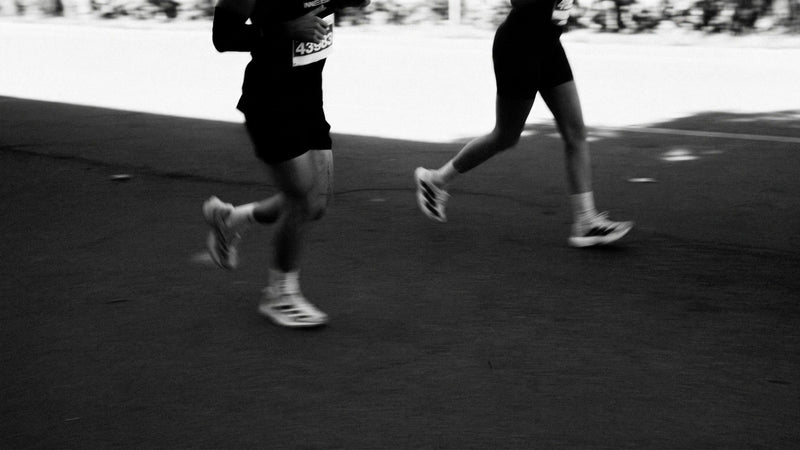
Add multiple fabric layers rubbing against dehydrated skin, and you have conditions that can produce worse chafing than the hottest August long run. Research published in Skin Pharmacology and Physiology confirms that stratum corneum hydration directly correlates with skin friction behaviour[1], and winter conditions systematically undermine that hydration. For high-mileage athletes training through the colder months, understanding winter-specific chafing, and preventing it, isn't optional. It's the difference between consistent training and weeks lost to skin that won't heal.
Cold Weather Attacks Your Skin's Barrier Function
The science is straightforward but often overlooked. Your skin's ability to resist friction depends on the integrity of the stratum corneum, a thin layer of dead cells held together by lipids, primarily ceramides, cholesterol, and free fatty acids. This "brick and mortar" structure controls transepidermal water loss (TEWL) and maintains the hydration levels that keep skin supple and resilient.
Winter disrupts this system from multiple angles. Cold ambient air carries less moisture, creating a steeper water gradient across the skin that accelerates evaporation. Research in the Journal of Investigative Dermatology has shown that abrupt decreases in environmental humidity induce measurable abnormalities in barrier homeostasis[3]. Indoor heating strips relative humidity further, with most heated homes and offices sitting between 20 to 30% relative humidity in winter, well below the 40 to 60% range optimal for skin health[5].
A 2023 study published in Skin Health and Disease found that TEWL peaked during winter months compared to summer[2], confirming that cold-season barrier function is measurably compromised. When that compromised skin meets repetitive friction during a long run, the damage threshold drops considerably. What your skin tolerated in October may produce raw, bleeding chafe marks by January.
The paradox runners face is this: dry skin doesn't mean less friction. Tribology research from the Journal of the Royal Society Interface found that skin friction against textiles increases in a complex, non-linear relationship with hydration[4]. Critically dehydrated skin becomes rough and catches against fabric at a micro-level, while moderately hydrated skin moves more smoothly. Winter running puts skin in precisely the wrong zone: dehydrated enough to lose resilience, but still producing sweat under layers that traps moisture unevenly across the body.
Layering Creates Friction Zones That Don't Exist in Summer
The clothing problem compounds the skin problem. Summer running is typically one layer: shorts and a singlet. Winter running demands a base layer, potentially a mid-layer, an outer shell, tights, gloves, a buff or hat. Every additional layer introduces new seam lines, fabric interfaces, and compression points.
Base layers sit directly against skin and move with every stride. Mid-layers shift independently. The result is shearing forces between fabric surfaces that transfer directly to the skin beneath. Waistbands from tights overlap with base layer hems. Jacket zippers press through mid-layers onto chests. Sports bra straps compress under pack straps under jacket straps: three layers of friction concentrated on shoulders and the upper back.
Running-specific research notes that cold weather can actually increase the incidence of nipple chafing specifically, because lower temperatures cause nipple erection and increase contact with clothing fabric. This is especially common in male runners who lack an additional barrier layer between skin and shirt. NipGuards and medical tape become winter essentials for distance runners, not because they sweat more, but because the mechanical contact is more aggressive[7].
The fabric itself matters enormously. Cotton is the classic offender: it absorbs sweat, holds it against skin, and creates a heavy, abrasive surface[9]. But even technical fabrics behave differently in cold conditions. Moisture-wicking base layers work by spreading sweat across a larger surface area for evaporation. In cold air, that evaporation happens unevenly, creating patches of damp and dry fabric that alternate between sticking and sliding against skin. For runs exceeding two hours in cold conditions, this pattern produces cumulative micro-damage that surfaces as painful chafing hours later.
"Dry skin doesn't mean less friction. Winter puts skin in precisely the wrong zone."
The Hidden Sweat Problem
Here's what catches runners off-guard: you still sweat in winter. Core body temperature rises during effort regardless of ambient conditions. The difference is that cold air suppresses the sensation of sweating. You don't feel drenched, so you don't think about moisture management. But the sweat is there, concentrated in the same high-friction zones where chafing begins.
Salt crystallisation adds another dimension. As sweat evaporates in cold, dry air, it leaves sodium chloride residue on the skin surface. These microscopic crystals act as an abrasive between skin and fabric. As dehydration increases, sweat becomes more concentrated with salt, and that salt irritates skin and increases friction damage.
Ultrarunners training through winter for spring 100-milers know this pattern intimately. A 20-mile training run in February might produce less visible sweat than the same run in July, but the chafing aftermath can be worse, because the salt concentration is higher, the skin barrier is compromised[8], and the layers trap irritants against the body for hours.
A Winter-Specific Prevention Protocol
Preventing winter chafing requires addressing all three factors simultaneously: barrier repair, friction reduction, and moisture management.
Start before you run. Apply a barrier protection product to known friction zones 15 to 20 minutes before heading out. This gives the product time to bond with the skin surface and form a stable protective film. For elite distance athletes, this means feet (between toes, heels, arches), inner thighs, underarms, chest and nipples, waistband line, and anywhere pack or vest straps contact skin. Products designed for extended duration, six or more hours of protection, matter more in winter because reapplication mid-run means exposing skin to cold air, which accelerates moisture loss.
Maintain skin hydration between runs. The 48 hours between training sessions are where winter barrier repair happens. A ceramide-based moisturiser applied post-shower helps restore the lipid matrix of the stratum corneum. Research published in the Journal of Dermatology demonstrates that ceramide-containing formulations significantly improve skin barrier function and hydration[6], rebuilding exactly what winter strips away. This isn't vanity. It's maintenance that keeps training-ready skin on your body.
Choose your layers deliberately. Flat-seam construction in base layers eliminates the most common mechanical irritation point. Merino wool blends or high-quality synthetic base layers outperform cotton in every condition, but especially in cold weather where moisture management is critical. Ensure base layers fit snugly without compression: the fabric should move with your skin, not against it.
Stay hydrated. Runners consistently under-hydrate in cold weather because thirst signals diminish. But dehydration concentrates sweat salts and impairs the skin's ability to maintain barrier function. Carry the same hydration strategy into winter training that you'd run in summer. Your skin needs it even if your mouth doesn't ask for it.
Where Aura Fits in the Winter Long Run
The gap in winter body care for distance runners is the same gap that exists year-round, amplified. Most anti-chafe products were designed for 45-minute gym sessions or casual 5K runs. They last an hour, maybe two, before breaking down. In summer, runners tolerate this by reapplying at aid stations or carrying backup. In winter, reapplication means unzipping layers, exposing treated skin to cold and wind, and hoping the product adheres to skin that's already compromised.
Aura Stride was built for the conditions that break other products. Six or more hours of protection from a single application means your winter long run, 18, 22, 26 miles through cold, dry air with multiple fabric layers, stays protected from start to finish. No mid-run strip-down. No hoping aid stations stock something that works. The formulation is designed to bond with skin and resist breakdown from sweat, friction, and environmental stress: exactly the combination winter training demands.
For daily training sessions in cold weather, Aura Stride provides reliable protection for runs up to two hours. And for post-run recovery, Aura Recovery helps restore the skin barrier with pharmaceutical-grade ceramides, rebuilding what winter and training strip away.
For runners building through January and February toward spring racing, consistent training is everything. A week lost to chafed thighs or cracked, raw skin under a sports bra isn't just painful: it's mileage you can't get back. Protecting the foundation means the miles keep adding up, month after month, through whatever the weather offers.
The long run doesn't stop for winter. Neither should your protection.
Frequently Asked Questions
Does chafing really get worse in cold weather?
Yes. Cold air and indoor heating both reduce ambient humidity, which strips moisture from the skin's outer barrier, the stratum corneum. Research confirms that transepidermal water loss increases during winter months, leaving skin drier, rougher, and more vulnerable to friction injury. Additional clothing layers create new friction zones that don't exist during summer running. The combination of compromised skin barrier and increased mechanical friction makes winter chafing a genuine risk for distance runners.
Why do I still chafe when I'm not sweating much in winter?
You are sweating, you just don't feel it as intensely. Core temperature rises during effort regardless of ambient conditions, and cold air suppresses the sensation of moisture on skin. Sweat still accumulates under layers, but it evaporates unevenly, leaving concentrated salt deposits that act as abrasives against fabric. This salt-on-dry-skin combination can produce worse friction damage than heavy summer sweating.
What areas are most prone to winter chafing for runners?
The highest-risk zones shift in winter due to layering. Inner thighs, nipples and chest, underarms, waistband lines, and anywhere pack or jacket straps sit become primary friction sites. Sports bra bands and straps are especially vulnerable as multiple layers compress on top of them. Feet remain a year-round concern, with cold-weather sock choices adding another variable to blister risk.
How often should I apply anti-chafe products in winter?
Ideally, once, before you run. Products designed for extended duration (six or more hours) eliminate the need for mid-run reapplication, which is especially impractical in winter when accessing skin means removing multiple layers in cold conditions. Apply 15 to 20 minutes before heading out to allow proper skin bonding. For runs exceeding six hours, carry a small amount in your pack for use at planned stops.
Does moisturising between runs actually help prevent chafing?
Significantly. Maintaining stratum corneum hydration between training sessions rebuilds the skin's natural barrier function, the same barrier that cold weather degrades. Ceramide-based moisturisers are particularly effective because they replenish the lipids that form the structural matrix of the skin barrier. Consistent post-shower moisturising throughout winter is one of the most impactful things runners can do to reduce chafing risk across an entire training block.
References
- Zhu YH, Song SP, Luo W, Elias PM, Man MQ (2011). Characterization of skin friction coefficient, and relationship to stratum corneum hydration in a normal Chinese population. Skin Pharmacology and Physiology, 24(2), 81-86. https://doi.org/10.1159/000321993
- Green M, Kashetsky N, Feschuk A, Maibach HI (2022). Transepidermal water loss (TEWL): environment and pollution — a systematic review. Skin Health and Disease, 2(2), e104. https://doi.org/10.1002/ski2.104
- Sato J, Denda M, Chang S, Elias PM, Feingold KR (2002). Abrupt decreases in environmental humidity induce abnormalities in permeability barrier homeostasis. Journal of Investigative Dermatology, 119(4), 900-904. https://doi.org/10.1046/j.1523-1747.2002.00589.x
- Gerhardt LC, Strässle V, Lenz A, Spencer ND, Derler S (2008). Influence of epidermal hydration on the friction of human skin against textiles. Journal of the Royal Society Interface, 5(28), 1317-1328. https://doi.org/10.1098/rsif.2008.0034
- Kim S, Kim J, Lee Y (2023). Effects of winter indoor environment on the skin: unveiling skin condition changes in Korea. Journal of Cosmetic Dermatology, 22(7), 2139-2147. https://doi.org/10.1111/jocd.15754
- Kono T, Miyachi Y, Kawashima M (2021). Clinical significance of the water retention and barrier function-improving capabilities of ceramide-containing formulations: a qualitative review. Journal of Dermatology, 48(12), 1807-1816. https://doi.org/10.1111/1346-8138.16175
- Ahomies AL, et al. (2025). Skin diseases in long-distance runners. JEADV Clinical Practice, 4(1), e613. https://doi.org/10.1002/jvc2.613
- Proksch E, Berardesca E, Misery L, Engblom J, Bouwstra J (2020). Dry skin management: practical approach in light of latest research on skin structure and function. Journal of Dermatological Treatment, 31(7), 716-722. https://doi.org/10.1080/09546634.2019.1607024
- Derler S, Gerhardt LC (2012). Tribology of skin: review and analysis of experimental results for the friction coefficient of human skin. Tribology Letters, 45, 1-27. https://doi.org/10.1007/s11249-011-9854-y