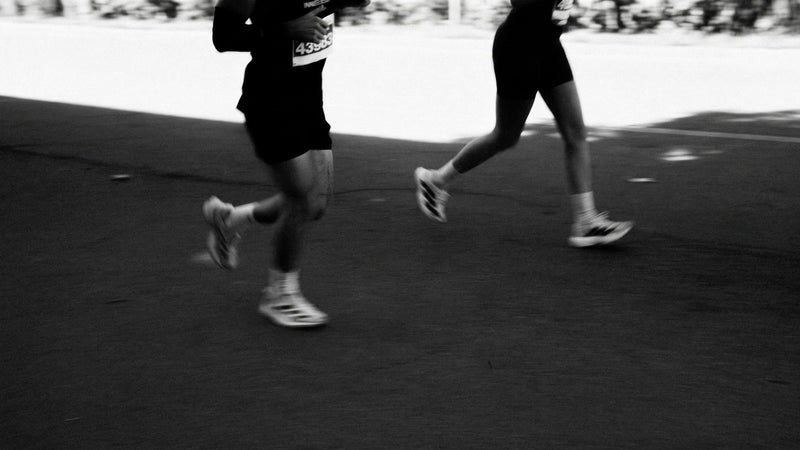
Buttock chafing is a common problem in distance running, and a rarely discussed one. It tends to show up somewhere past the hour mark as a hot, stinging line along the gluteal cleft, or a raw patch where the lower buttock meets the back of the thigh, and it can turn the last stretch of a long run into something to endure. If you've searched for butt chafing running advice, you're in good company, and nothing about it is unusual or embarrassing.
This guide explains why the area chafes, how bodies and kit differ, what helps before, during and after a run, and how to tell ordinary friction from a skin problem that needs a clinician. Where the evidence is thin, we say so.
Why Do Your Buttocks Chafe When You Run?
Chafing is irritation caused by rubbing. Cleveland Clinic names friction as the root cause, with moisture from sweat, heat or humidity making skin easier to damage, and lists the places where the buttocks meet, or where the buttocks and thighs meet, among the common sites.[1]
The gluteal cleft combines nearly every risk factor in one place. Two skin surfaces press together with every stride. Heat builds between them. Sweat collects and has little room to escape, because the area sits under a waistband, a liner and shorts. Over a long run that adds up to thousands of small contacts in a warm, damp fold.
Sustained moisture is the part most runners underestimate. In a laboratory study of 22 adults, Gerhardt and colleagues found a strongly positive linear relationship between skin moisture and the friction coefficient, and friction between skin and completely wet fabric was more than twice that of natural skin on dry fabric.[2] The study used the forearm, not the buttock, so treat it as a mechanism rather than a measurement of your run. The direction is still clear: the wetter the skin and fabric, the more the skin grips and drags.
What Does Moisture Actually Do to Skin?
The authors of the same study suggest that rising hydration softens skin and increases the real area of contact and adhesion between skin and textile.[2] That helps explain why a run that felt fine at 45 minutes can hurt at two hours without anything else changing.
There is a second consequence. Dermatology reviews describe intertrigo, inflammation in a skin fold, as friction between two skin surfaces where moisture is trapped by poor air circulation.[3] That description fits the gluteal cleft well. We return to it below, because the same conditions that cause simple chafing can also let yeast, fungus or bacteria settle in.
If you want the broader mechanics, our piece on the science of skin friction covers them. The practical point here is narrower: in this area, dryness and keeping the surfaces from grinding matter more than almost anything else.
Who Gets Buttock Chafing, and Why Does It Differ Between Bodies?
Anyone who runs far enough can chafe here. Cleveland Clinic lists body shape and weight (a higher BMI raises risk) among the contributing factors, alongside ill-fitting or rough clothing.[1] Where your skin folds, and where your thighs meet your buttocks, varies with build, so the spot that rubs varies too. For some runners it is the cleft itself. For others it is the crease under the buttock.
Skin may also respond to moisture differently between people. In the Gerhardt study, friction on female skin was significantly more sensitive to hydration, with friction coefficients rising by about 43 percent in women and 26 percent in men between very dry and normally moist skin.[2] That was a small laboratory sample on one body site, so it does not mean women will chafe more on a run. It does suggest that individual skin behaves differently, and that what works for a training partner may not work for you.
The honest takeaway is to map your own pattern. Note where the irritation sits, how far into a run it appears, what you wore and what the weather did. That record is more useful than any general rule.
How Do Shorts, Tights and Liners Cause or Prevent It?
Clothing sits between the two surfaces, and it can help or hurt. Cleveland Clinic advises moisture-wicking fabrics over cotton, a closer fit so clothing moves less against the skin, attention to underwear, and seamless options where seams are the problem.[4] We know of no controlled trial comparing running shorts for this area, so what follows is practical reasoning, not proof.
Seams. A seam that lands in or beside the gluteal cleft is crossed thousands of times in a long run. Flat or bonded seams are gentler than raised stitching, and no seam at that point is gentler still. Try each pair on, squat, and mimic your stride before committing to a long run in it.
Liners or no liner. A built-in liner can keep skin from rubbing on the outer short, but it also adds seams, can hold sweat against the skin and can bunch when wet. Unlined shorts with nothing underneath can slide and rub. Neither is right for everyone. Many runners do best with one snug layer, whether a liner or a close-fitting short, rather than a liner plus underwear, because each extra layer adds seams and holds moisture. Test the combination on a run close to your target distance.
Length and waistband. Tights and longer shorts keep the thighs from touching, which helps with the problem we cover in our inner-thigh guide, but they put more fabric in the buttock area. A waistband that digs in or rolls can create a rub line higher up. Fit should feel secure without pinching.
What Helps Before, During and After a Run?
The principles are simple: reduce moisture, reduce friction, and let the skin rest. Cleveland Clinic recommends changing out of wet clothing quickly, using a moisture-absorbing powder in areas such as the groin, and applying petroleum jelly or a lubricating gel, cream or balm to friction-prone areas, especially during sweaty, repetitive activities like running.[4]
Before. Start with clean, dry skin and kit you've already tested. Apply a barrier product along the gluteal cleft and, if that is where you rub, to the lower buttock and the crease where it meets the thigh. A thin, even film over the whole contact area tends to work better than a thick lump in one spot. On long runs, consider a second application at a planned stop. If you want to compare options, we've looked at petroleum jelly and anti-chafe balm.
A balm is one choice. Aura Full is a 100% natural anti-chafe balm made with lanolin, shea butter, coconut oil, beeswax, jojoba oil, castor oil, vitamin E and tea tree oil, with no petrolatum, mineral oil, synthetic fragrance or parabens. It is a water-repellent barrier balm designed for marathon distance and daily training. It contains lanolin and tea tree oil, so patch test first if your skin is sensitive. Apply any barrier product to intact skin only.
During. If you feel a hot spot starting, act early. Straightening a bunched liner, pulling the waistband flat or reapplying at a stop costs a minute and can save the last hour.
After. Moisture is the enemy after the finish line too. Change out of damp kit promptly, shower, and dry the area thoroughly, patting rather than rubbing. DermNet suggests drying folds well after exertion, and notes that a cool hairdryer can help.[5] Cleveland Clinic suggests a drying powder, but not together with ointments on the same skin.[6] Wash running shorts and liners after each wear, and let them dry fully before the next run.
What Should You Do When It's Already Irritated?
For mild chafing, Cleveland Clinic advises stopping whatever is causing it, washing gently with mild soap and warm water, patting dry, applying petroleum jelly or an unscented moisturizer, and wearing loose, breathable clothing. With proper care it typically heals within a few days to a week.[4]
In practice that means an easy day or a rest day, a clean change of clothes and a gentle approach. Skip scrubbing, fragranced products and anything that stings. If the skin is raw or broken, cover it and let a clinician guide you rather than applying a balm and heading out again. Our guide to treating chafing after a run goes deeper into recovery.
Be careful with medicated creams you haven't been advised to use. Cleveland Clinic cautions against corticosteroid creams on jock itch because they can worsen the infection,[7] while DermNet describes low-potency steroids as an option for inflammatory causes in skin folds and says potent ones are best avoided there.[5] Since it is hard to know which situation you are in, a rash that is not clearly simple chafing is best looked at before you treat it.
When Is It Not Just Chafing, and When Should You See a Clinician?
Most buttock chafing settles with care. Sometimes it does not, because damaged, damp skin has become infected or the rash was something else from the start.
Intertrigo. Cleveland Clinic explains that intertrigo itself is not an infection, but friction and trapped moisture damage the skin and let normal skin bacteria or fungi overgrow. Candida (yeast) is the most common secondary infection, and staph bacteria are a common bacterial cause.[6] DermNet lists between the buttocks as a common site and adds that infections such as candida, erythrasma and tinea tend to be one-sided, while inflammatory causes tend to be symmetrical.[5]
Fungal infection. Jock itch (tinea cruris) is a fungal infection of the groin. MedlinePlus notes that friction from clothes and prolonged moisture can trigger it, that it may spread near the anus, and that the patches are typically red, raised and scaly with sharply defined edges.[8] Cleveland Clinic describes a red, itchy rash in the groin, upper thighs or rectum.[7]
Bacterial infection. DermNet lists impetigo, boils and folliculitis among the bacterial complications of skin folds, which can be painful and produce pus, and says a foul odor can signal secondary infection. A review of skin conditions in athletes also lists folliculitis, abscesses, cellulitis, tinea and intertrigo among common sports-related problems.[9]
When to see a clinician. Cleveland Clinic recommends seeing a healthcare provider if chafing has not improved after a week of home care, if pain or itching is severe, or if there are signs of infection such as yellow pus, a foul smell or warmth to the touch.[4] For jock itch, it adds that symptoms which worsen, spread or do not clear after two weeks warrant a visit, and that pregnancy is another reason to be seen.[7] We would add: see someone promptly for fever, spreading redness, cracked or bleeding skin, or a rash that keeps coming back.
A clinician can usually diagnose these conditions by looking, and may confirm with a simple skin scraping.[8] If you have diabetes or a weakened immune system, check in sooner rather than later. This article is general information, not a diagnosis.
A Calmer Long Run
Buttock chafing responds to ordinary habits: kit with the right seams and fit, one snug layer rather than several, barrier protection along the cleft before you start, a quick fix when a hot spot appears, and a prompt change and thorough dry afterward. Track where and when it happens, and adjust one thing at a time.
If you'd like a balm in that routine, Aura Full is made for marathon distance and daily training. Test it on a training run before race day, and see a clinician if your skin shows signs of infection or fails to settle.
Evidence on products for this specific area is limited, and response varies. What is well supported is the principle: keep skin dry, keep surfaces from grinding, and give irritated skin time to recover.
Frequently Asked Questions
Why does my butt chafe when I run?
Friction, heat and trapped sweat in the gluteal cleft and where the buttocks meet the thighs. Cleveland Clinic identifies friction as the root cause of chafing, with moisture making skin easier to damage. Seams, bunching liners and a damp waistband add to it, and the longer the run, the more contacts and moisture accumulate.
How do I stop butt chafing while running?
Reduce moisture and friction. Wear well-fitting, moisture-wicking kit with flat seams, avoid stacking several layers, apply a barrier product along the cleft before you start, and change out of wet clothes promptly afterward. Dry the area thoroughly and wash running kit after each wear. If it keeps happening, change one variable at a time.
Should you wear underwear under running shorts?
No research we found settles this, so it depends on your kit. Many running shorts have a built-in liner and are designed to be worn on their own, and adding underwear creates extra seams and holds more sweat. If your shorts are unlined, a snug, seamless, moisture-wicking pair may work. Test it on a long run.
Is it chafing or a fungal infection?
Chafing is usually sore, red and stinging, and settles within days to a week with gentle care. Fungal rashes are typically itchy and scaly, with sharply defined edges, and may spread. You can't reliably tell at home. If it lasts beyond a week, keeps spreading or looks infected, see a clinician.
How long does butt chafing take to heal?
Cleveland Clinic says chafing typically heals within a few days to a week with proper care: gentle washing, a protective layer such as petroleum jelly or an unscented moisturizer, and loose, breathable clothing. See a healthcare provider if it hasn't improved after a week, if pain or itching is severe, or if there is pus, a foul smell or warmth.
References
- Cleveland Clinic. Chafing: How It Happens & How To Treat It. Cleveland Clinic Health Library. https://my.clevelandclinic.org/health/diseases/23517-chafing
- Gerhardt LC, Strässle V, Lenz A, Spencer ND, Derler S (2008). Influence of epidermal hydration on the friction of human skin against textiles. Journal of the Royal Society Interface, 5(28), 1317-1328. https://doi.org/10.1098/rsif.2008.0034
- Romanelli M, Voegeli D, Colboc H, Bassetto F, Janowska A, Scarpa C, Meaume S (2023). The diagnosis, management and prevention of intertrigo in adults: a review. Journal of Wound Care, 32(7), 411-420. https://doi.org/10.12968/jowc.2023.32.7.411
- Cleveland Clinic Health Essentials (2025). Skin Protection: Tips To Prevent Chafing. https://health.clevelandclinic.org/prevent-chafing
- DermNet. Intertrigo (Rash in body folds): Causes, Images, and More. DermNet New Zealand. https://dermnetnz.org/topics/intertrigo
- Cleveland Clinic. Intertrigo: What Is It, Causes, Symptoms & Treatment. Cleveland Clinic Health Library. https://my.clevelandclinic.org/health/diseases/21693-intertrigo
- Cleveland Clinic. Ringworm (Tinea Corporis): What It Looks Like, Causes & Treatment (includes jock itch). Cleveland Clinic Health Library. https://my.clevelandclinic.org/health/diseases/4560-ringworm
- MedlinePlus. Jock itch. MedlinePlus Medical Encyclopedia, National Library of Medicine. https://medlineplus.gov/ency/article/000876.htm
- Pujalte GGA, Costa LMC, Clapp AD, Presutti RJ, Sluzevich JC (2023). More Than Skin Deep: Dermatologic Conditions in Athletes. Sports Health. https://doi.org/10.1177/19417381211065026